
Getting Started with Medicare
Simple steps to understand your coverage and make confident healthcare choices.
- Understand your options
- Know your costs
- Get the coverage you deserve
Key
Points
If you are not drawing your Social Security benefits before turning 65, you must self-enroll into Medicare. If you have been drawing your benefits for a while, you may be auto-enrolled.
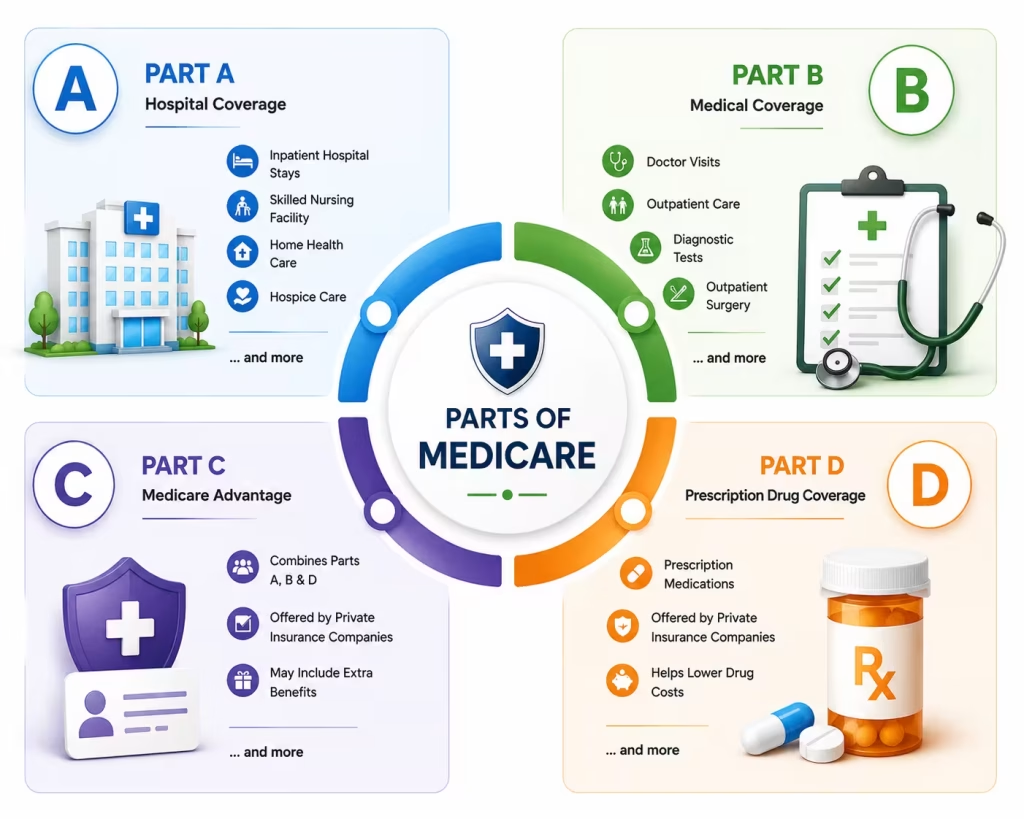
There are four main parts to Medicare:
- A – Hospital coverage
- B – Medical coverage
- C – Medicare Advantage
- D – Prescription drug coverage
Medicare does not cover all services. Most notably, dental, vision, and hearing is generally not covered.
What is Medicare?
Original Medicare is coverage managed by the federal government. Medicare is not free and generally, there is a cost for each service. The government pays for Medicare via a Medicare tax and monthly premiums.
Once you pay you deductibles, Medicare begins to pay their share. What’s left over is your share, also known as your coinsurance/copayment. Unfortunately, there is no yearly limit or maximum out of pocket for original Medicare. That means you continue to be responsible for your share of all medical costs, no matter the amount.
With original Medicare, you don’t need to choose a primary care physician and you do not need a referral to see a specialist. Although, all physicians you see must accept Medicare for you to be covered. Physicians also have the ability to “accept assignment”. This means that the physician accepts the approved Medicare cost for a specific service. If a physician does not “accept assignment”, they may charge up to 15% more than the Medicare approved amount, which is also known as excess charges. A list of services Medicare does not cover can be seen at the bottom of this page.

How to Start Medicare
If you are already drawing your social security benefits at least 4 months prior to turning 65, your Part A and Part B Medicare will automatically start the 1st day of your birth month, unless your birthday is on the 1st. If you have credible employer health coverage at the time, you may defer your Part B until that coverage ends. It’s important to check and see which option has the best and most affordable coverage for you.
If you are not drawing your social security benefits yet, you will need to self-enroll into Medicare Parts A and B. Most commonly, this can be achieved by visiting your local Social Security Administration office, or by starting an account at SSA.gov. In SSA.gov, you may start drawing your benefits as well as start your Medicare all in one place.
Parts of Medicare – The ABC’s
Medicare has 4 main parts: Part A, B, C, and D. Each part has its own role in your overall health coverage and each part may start at different times. What’s important to distinguish is that costs associated with each part vary. You must sign up for Parts A, B, and D when you become eligible and plan to use Medicare as your primary insurance, as these parts incur a penalty for late enrollment.

Part A
Hospital Coverage
Part A is your hospital insurance. This covers most expenses related to the hospital, such as inpatient hospital stays, home health care, hospice, skilled nursing facilities, durable medical equipment, and more. For a full list of what Part A is responsible for, visit Medicare.gov
Cost Category |
Description & Amount |
|---|---|
Part A Premium | $0 for most people. To qualify for a $0 premium, you must have been paying Medicare taxes for at least 10 years. If you don’t qualify, your premium is based on the number of years you have paid Medicare taxes. The premium is either $565 or $311, which is based on whether you paid taxes less than or greater than 30 quarters, respectively. |
Part A Penalty | If pay for your Part A, your premium may be higher if you sign up late. The penalty is an extra 10% on top of your monthly premium for twice the number of years you should have had Part A. |
Part A Deductible | $1736 for each time you’re admitted to a hospital per benefit period – each benefit period lasts until you have no longer been in care for a continuous 60 days. |
Costs/Inpatient Hospital stays | Days 1-60: $0 after you pay your deductible |

Part B
Medical Coverage
Part B is your medical insurance. This includes expenses related to outpatient surgeries, doctor office visits, diagnostics, chemotherapy, and more. For a full list of what Part B is responsible for, visit Medicare.gov. Low-income individuals may qualify for state assistance or Medicaid. State assistance may help with costs such as premiums, deductibles, and coinsurance.
Cost Category |
Description & Amount |
|---|---|
Part B Premium | $202.90/month is the base premium. Your costs for Part B may be higher if you were a high-income earner. See the IRMAA chart below to see your pricing for 2026. |
Part B Penalty | 10% for each year you should have signed up for Part B. This penalty is added on top of your regular base premium. Since premiums change every year, so does this penalty…and it’s lifelong! |
Part B Deductible | $283, as a one-time payment per year. |
Coinsurance | 20% for most of your Medicare-covered, Part B services after the deductible has been paid. |

Part C
Medicare Advantage
Part C is Medicare Advantage, est 1997. This a not a part of original Medicare, but encompasses coverage included in parts A, B, and D. This is private insurance that we, as brokers, can help you sort through. There are many options that can fit your needs – There are even plans that may help pay for part of your Part B premium! To be enrolled in Medicare Advantage, you must also be enrolled in Parts A and B. Advantage plans must cover the same services that original Medicare covers, either in the same way or better. Learn more about Medicare Advantage.

Part D
Prescription Drug Coverage
Part D is for your prescription drug coverage. This is provided by private insurance companies to reduce the cost of prescription medications. This may be a separate policy or included in a Medicare Advantage policy w/ Prescription Drug coverage, or MAPD. Low-income individuals may be eligible for the Extra Help program, or Low-Income Subsidy (LIS). This program helps people by reducing their prescription drug costs.
Cost Category |
Description & Amount |
|---|---|
Part D Premium | Premiums vary based on which plan you pick. High-income earners may pay an increased premium. See the IRMAA chart below to see your pricing for 2026. |
Part D Penalty | 1% for each month that you should have been signed up for Part D. This penalty is added to your base premium…and it’s lifelong! You must not go without credible prescription coverage for longer than 63 days to avoid a penalty. |
Part D Deductible/Maximum Out of Pocket | $615 is the max deductible for 2026. Plans may vary. The Maximum Out of Pocket (MOOP) for 2026 is $2,100. After you pay the MOOP, your out-of-pocket costs for the remainder of the year are $0. |
Coinsurance | After your deductible, your plan begins to help pay for your prescriptions. Most plans offer a copayment for drug tiers 1 and 2, as these tiers are deductible exempt. Tiers 3-5 are usually offered at a coinsurance. Costs are dependent on which medicines you take. |
Medicare Supplement
This is not a part of Medicare, rather it’s private supplemental insurance, also known as Medigap. This is insurance that we, as brokers, help you find. The objective of Medicare Supplement is to provide you with great health coverage at a monthly premium. You may have heard of Plans G and F. Those refer to Medigap plans. Learn more about Medicare Supplement/Medigap
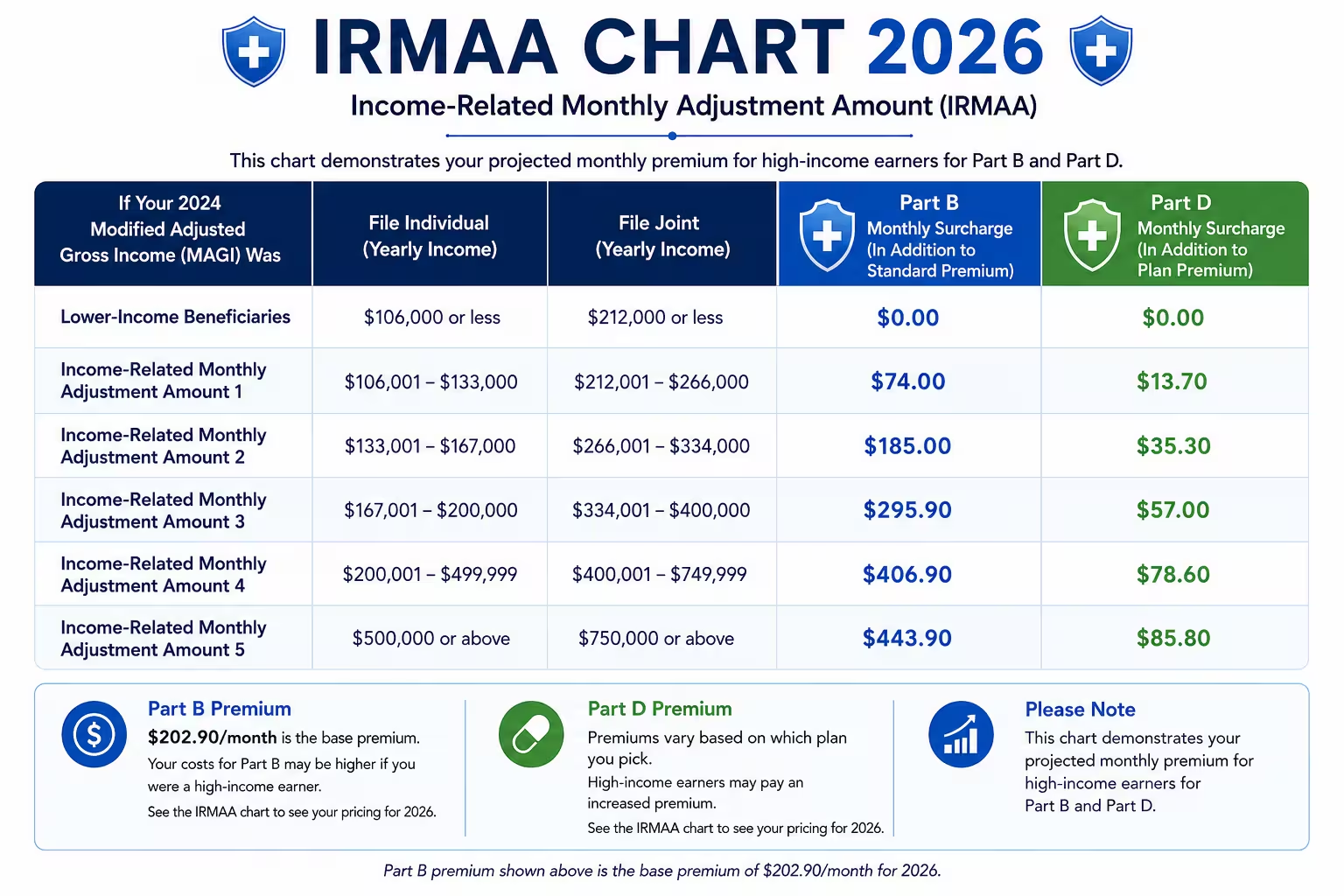
Income-Related Monthly Adjustment Amount (IRMAA)
This chart demonstrates your projected monthly premium for high-income earners for Part B and Part D.
What is not covered by Medicare?
Medicare does not cover all services. The following list are some items not covered by original Medicare:
- Ancillary services, such as dental, vision, and hearing (medically required care may be Medicare approved).
- Podiatry or routine foot care
- Long Term Care
- Custodial Care
- Cosmetic surgery, or services that are not medically necessary
- Chiropractic services
- Acupuncture
- Care outside of the USA
To return to our Medicare checklist, click here.
We're Here to Help You!
Have questions or need personalized guidance? Fill out the form and one of our experts will get back to you.