
Already on Medicare Overview
We’re here to help you explore your supplemental options and find the right coverage that fits your needs.
- Trusted guidance from Medicare experts
- Compare your supplemental options
- Extra protection with ancillary plans
Key
Points
We’re here to help you. Use us! We are a free resource to aid those that are eligible in their supplemental options.
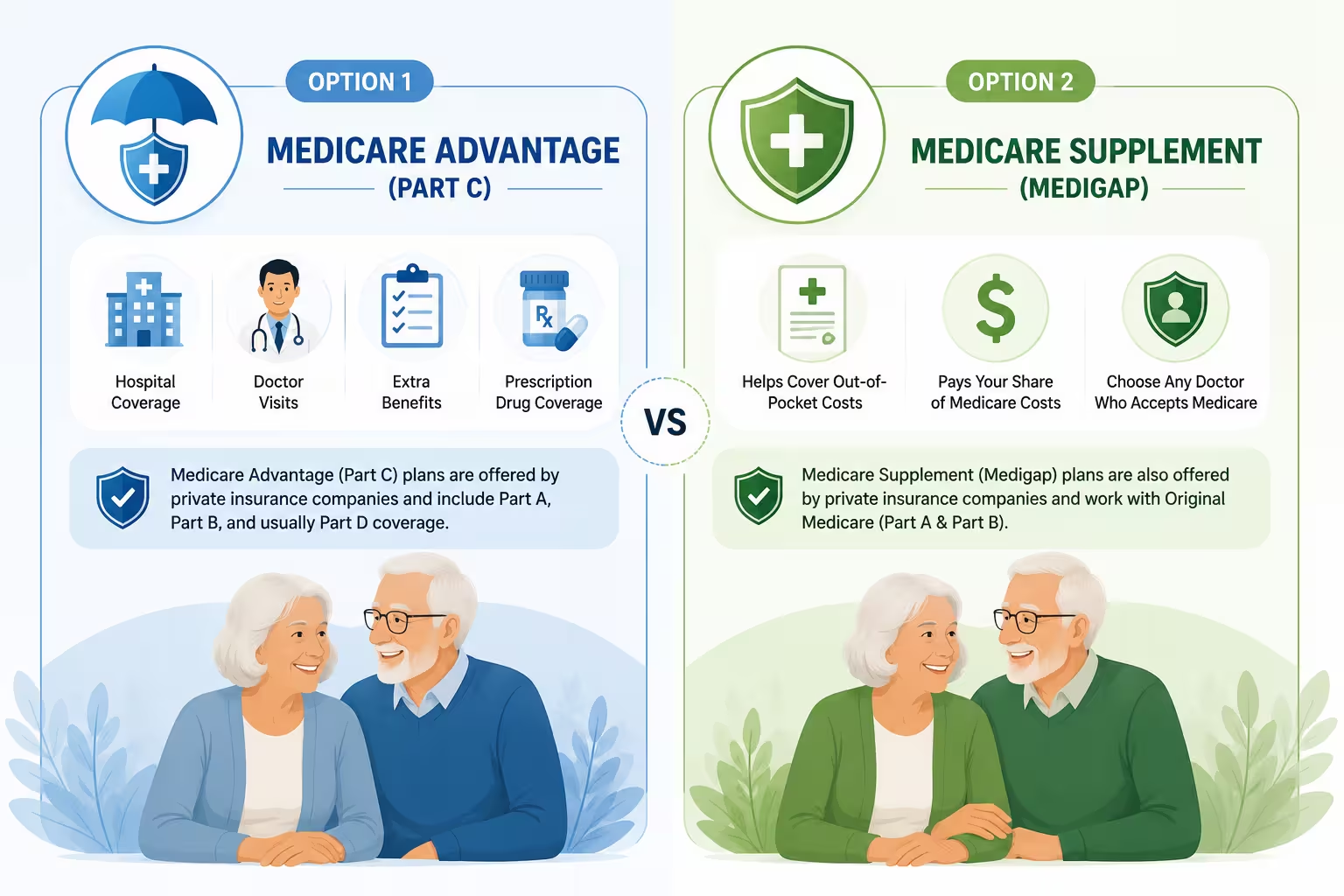
The main two options for supplemental health coverage are Medicare Advantage and Medigap- both cover beneficiaries very differently.
Ancillary products provide extra protection - Hospital Indemnity, Short-Term Care, Cancer, and DVH plans provide financial relief when the time comes.
If you’re already on Medicare and (1) you would like to speak with an enrollment specialist about enrolling into supplemental insurance that fits your needs or (2) you are already enrolled into a supplemental plan and you would like to switch, please fill out the contact form.
As you may know, once you get Parts A and B of Original Medicare, you have supplemental options that become available.
As brokers, it’s our job to help you sort through these options and find a plan that fits you best. Follow these steps to continue your Medicare journey:
- Learn about the supplemental options that are available to you: The main two are Medicare Advantage or Medicare Supplement, otherwise known as Medigap.
- Fill the gaps in your coverage. Regardless of what plan you choose, not everything will be covered at 100%. Review what ancillary products are available to see if there is a right match for you.
- Use an expert to enroll! Our services are free and we’re available every day for questions. Using an agent/agency does not affect plan pricing in any way.
- Review your coverage annually during the Annual Enrollment Period (AEP). Plans can change every year. It’s important to make sure your plan still covers you in the best way possible for the right price.
We're Here to Help You!
Have questions or need personalized guidance? Fill out the form and one of our experts will get back to you.
Medicare Advantage
Medicare Advantage, or Part C, is private supplemental insurance available to those looking for additional coverage. Once you become a member, your Medicare Advantage company becomes your primary insurer, while Original Medicare becomes secondary. However, Advantage plans are required to cover the same services that Original Medicare covers, either in the same way or better.
This option was designed to offer Medicare beneficiaries a lower-premium option compared to Medigap. Medicare Advantage plans also offer coverage for prescriptions. Plans offer services to members and in return, members pay a coinsurance or copayment.
Depending on your service area, there are many plans available. Picking a Medicare Advantage is usually dependent on your specific needs. While most Medicare Advantage plans have a $0 premium, there are major factors that dictate what plan is best for you such as prescription drug costs and the copayment amounts required for specific services. There are even plans for Veterans! Learn More
Medicare Supplement – Medigap
Medicare Supplement is also private supplemental insurance that covers out-of-pocket costs that Medicare does not pay. However, Medicare Supplement becomes a secondary insurer, while Original Medicare remains as your primary insurer. There are 10 different supplement plans to choose from depending on how much coverage you would like, but each plan must remain the same no matter which company offers said plan.
These policies help pay for your share of Medicare expenses. Medicare pays for 80% of your medical expenses, and Medicare Supplement pays for the remaining 20%. Members pay for this via monthly premiums.
An important reminder: Medicare Supplement does not include Prescription Drug Coverage (PDP). Beneficiaries that want a Medicare Supplement plan must also choose a PDP. Learn More
Prescription Drug Plan – PDP
Drug costs are constantly changing. Prescription Drug Plans, or Part D, are designed to help cover these prescription costs via cost-sharing. Drugs are organized into different tiers, and each tier is covered differently by the member. After a member hits their deductible, lower tier drugs are covered by a copayment and higher tier drugs are covered by coinsurance.
The cost-share for drugs and the plan premium are the two most important factors when considering a PDP. This means a beneficiaries own prescriptions dictate which plan they decide to go with.
It’s important to note: Part D late enrollment also introduces life-long penalties. Signing up for a PDP when you’re first Medicare eligible is required, unless you have existing credible coverage.
Ancillary Products
Dental/Vision/Hearing (DVH)
The most sought after ancillary plans. Dental, vision, and hearing are typically not covered by Original Medicare, Medigap, or even the VA. The exception is if it is medically required and Medicare-approved.
These plans offer discounts on exams and products that you may require. Dental plans fully cover your preventative services and cover you for comprehensive services that may arise, such as crowns, fillings, and implants.
Most Medicare Advantage plans offer coverage for DVH, but Medigap does not. If you need additional protection and would like to view your options, please reach out!
Hospital Indemnity
These plans help you cover out-of-pocket expenses when dealing with copayments and deductibles. Hospital Indemnity can help cover hospital stays, outpatient surgeries, ambulance rides, therapy visits, and more!
You select the benefit amount and if any of the services above are required, you get reimbursed directly to cover the costs. Indemnity plans work very well with Medicare Advantage plans and High-deductible Medigap plans. Whether you’re under 65 or planning to retire, Hospital Indemnity may be perfect supplemental protection for you.
Cancer Insurance
A cancer policy helps individuals with their financial responsibilities once they have been diagnosed. You pick the benefit amount and once you’re diagnosed with cancer, you get paid – most often in the form of a lump-sum payment.
Beneficiaries on Original Medicare and Medicare Advantage are responsible for 20% of chemotherapy. Having a cancer policy can help alleviate this cost-share and help with your financial responsibilities until your maximum out of pocket is met.
If you would like to fill the gaps in your healthcare plan or your family has a history of cancer diagnoses, then these policies could be right for you.
Short-Term Health
Short-Term Heath (STH) insurance helps individuals that need additional medical care and support from family members, either in a nursing home, assisted living, or at your own home.
Patients receive a daily benefit amount to help offset costs associated with care. Family caregivers can often feel episodes of feeling burnt-out, and these plans can provide financial relief and caregiver support services as well.