
Medigap - Medicare Supplement
Medigap works with Original Medicare to complete your coverage, in your coverage , limiting your out-of-pocket costs and giving you peace of mind.
- Works with Original Medicare.
- No network limitations.
- Predictable out-of-pocket costs.
- Guaranteed renewable coverage.
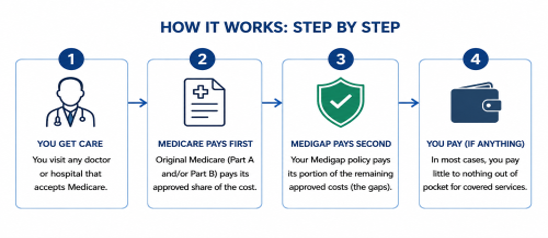
Medigap is private insurance that works in conjunction with Original Medicare. Medicare pays first, then Medigap covers a certain amount depending on which plan you have.
There are 10 standardized plans to choose from, depending on what your state offers.
Medicare Supplement does not cover Part D prescription drugs or dental, vision, and hearing. Those must be purchased separately.
The Medigap Open Enrollment Period (MOEP) allows you 6 months prior to your birth month, your 65th birth month, or the 6 months following your birth month to join a Medigap plan under guaranteed issue.
Medigap, or Medicare Supplement, is private insurance offered by companies to work with Original Medicare. Original Medicare pays first, then Medigap pays an additional amount on your behalf to “fill the gaps”. The amount Medigap pays depends on which plan you choose, but they could cover your deductibles and coinsurance. Currently, there are 10 Medigap plans available – each with different levels of coverage and monthly premiums.
The idea behind Medigap is to offer more comprehensive coverage for an individual if a serious illness or medical condition arises. Original Medicare only covers 80% of your Part B expenses, so the other 20% could get out of hand, especially since Medicare has no out-of-pocket maximum to protect you. Medigap will help pay the 20% on your behalf for the cost of a monthly premium. This benefit offers peace of mind to individuals since their out-of-pocket cost sharing would be limited.
How does it Work?
To be eligible for Medigap, you must have both Parts A and B of Medicare. Once you have Original Medicare, you get to choose a plan from a variety of different Medigap companies. However, all the plans offered are the same no matter which company you buy from. All plans are standardized and cannot change. For example, Plan G with Company X is the same Plan G with Company Y. The only difference is the price, reputation, and any other supplemental benefits these companies might offer.
These Medigap plans pay for your health expenses, but not everything is covered. Prescription drugs, dental, vision, hearing, and long-term care are not covered under Medigap. Prescription drugs can be covered by a Part D plan purchased separately. Failing to enroll on time into a Part D drug plan will result in a lifelong penalty. Long-term care is also not covered under Medigap.
There are a lot of advantages to using Medicare Supplement, such as:
- No networks to choose from – use any doctor that accepts Medicare
- Nationwide coverage
- No referrals for specialists
- Option to change plans any time*
- Out of pocket expenses are predictable
- Guaranteed renewable
- Household discounts may be applied if you’re living with someone else over 50.
Plan Types
There are 10 standardized plans available for Medigap. Not every state offers every plan. The most comprehensive plan you can buy is Plan F, which is available to beneficiaries that were eligible for Medicare prior to the year 2020. Plan F pays your Part B deductible, so there is no cost share associated with any health services.
The most popular choices in 2026 are Plan G and Plan N; the most comprehensive plans available to those just now aging into Medicare. Plan G requires you to pay an annual Part B deductible ($283 in 2026), while Plan N requires you to pay Part B deductible, plus $20 office visits, and it does not cover Part B excess charges*.
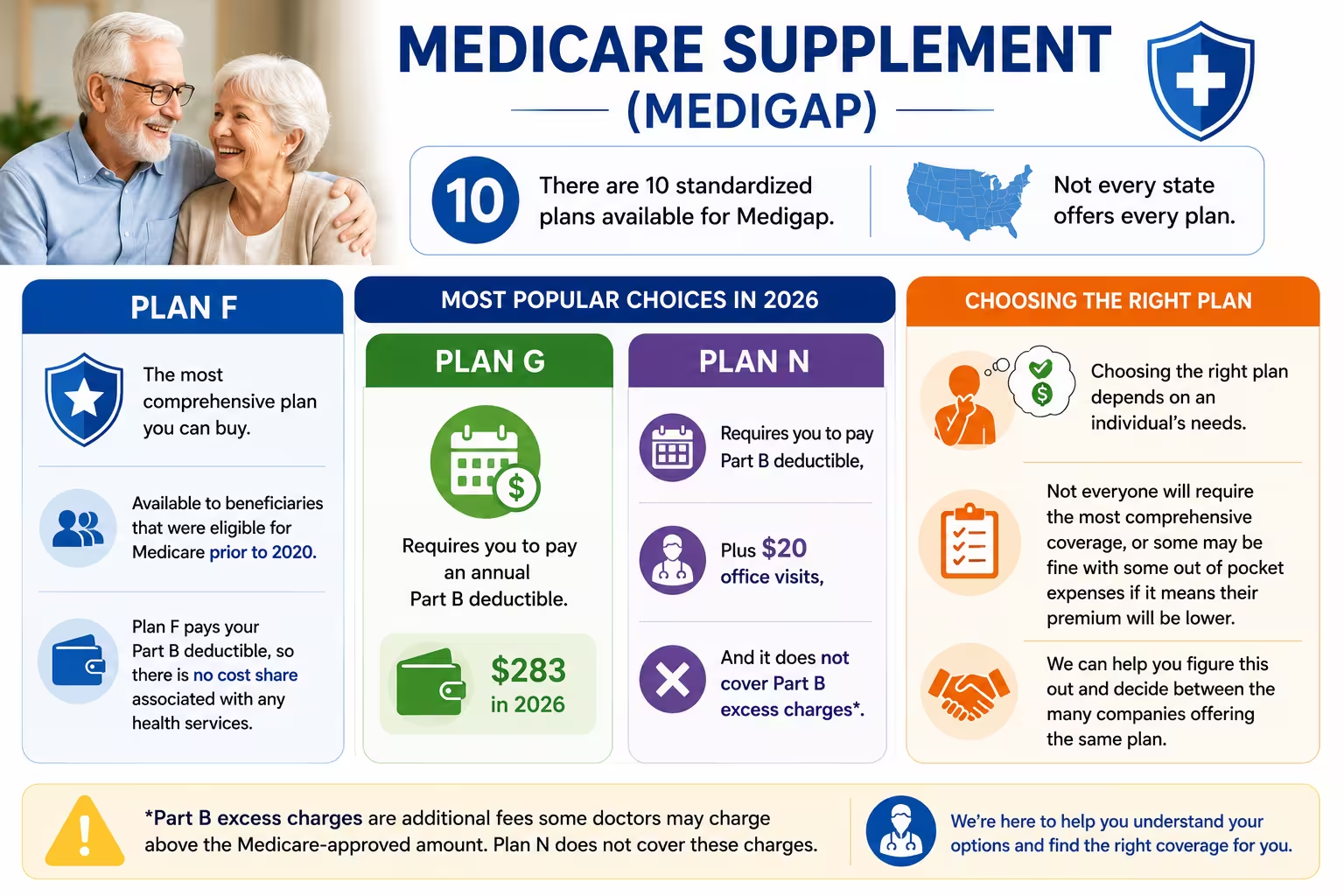
Choosing the right plan depends on an individual’s needs. Not everyone will require the most comprehensive coverage, or some may be fine with some out of pocket expenses if it means their premium will be lower. We can help you figure this out and decide between the many companies offering the same plan.
Cost
The cost of a Medigap plan is determined by your zip code, age, gender, tobacco use, and more. The older you get, the more “at risk” you become to insurance companies. The more comprehensive the coverage, the more expensive it is. Some states such as our home state Rock Hill, South Carolina have premiums start around $115 per month for a female. In Orlando, Florida, a 65 year old female will have premium options start around $217 per month.
Another factor for cost is the prescription drug plan for Part D coverage. Most Part D drug plans have premiums and depending on your prescriptions, there may be costs for those as well. Generally, if you have brand or specialty drugs, there is a coinsurance involved.
You may also consider purchasing dental, vision, and hearing insurance. In most cases, purchasing a dental plan will be more cost effective for individuals, even if they only go for 2 cleanings a year. Not only that, but if any comprehensive work is needed like crowns, bridges and implants, you’re covered. Premiums vary depending on which county and state you live in and how much coverage you want.
Medigap does have a price tag attached to it, but it is the most comprehensive coverage you can purchase that offers you peace of mind if anything should happen with your health.

Enrollment
Medicare Supplement plans can be switched at any time of the year. There are no enrollment period restrictions associated with changing your plan. There is, however, health underwriting required if you would like to change your current coverage. Insurance companies will look at your health history to determine if your risk is too high, and this may result in a higher premium or denial of coverage. Many healthy people decide to switch their Medicare Supplement plan to obtain a cheaper premium; by going through medical underwriting to attest they are not at high risk to the insurance company.
There is an open enrollment period for individuals just turning 65 or those that turned on their Part B of Original Medicare for the first time. The Medigap Open Enrollment Period (MOEP) allows you 6 months before your birth month, 6 months after the 1st day of your birth month, or the moment your Part B starts, to join a Medigap plan under guaranteed issue.
Some states offer annual Medigap Open Enrollment based on your Medicare anniversary date or your birthday, which means you can switch plans every year during that time period with no medical underwriting. Because of these rules, premiums for Medicare Supplement are double or even triple the premiums in states that don’t offer these rules.
Guaranteed issue rights are different in every state. It’s best to research your own individual state’s requirements or consult an agent at Senior Benefits Center. There are other ways to receive guaranteed issue rights as well, such as your Medicare Advantage plan being terminated or you move into a new service area.
Part D prescription drug coverage may be reassessed and changed every year during the Annual Enrollment Period (AEP). It’s important to review your drug coverage each year as companies may change their premiums and coverage.
Medicare Advantage Vs Medigap
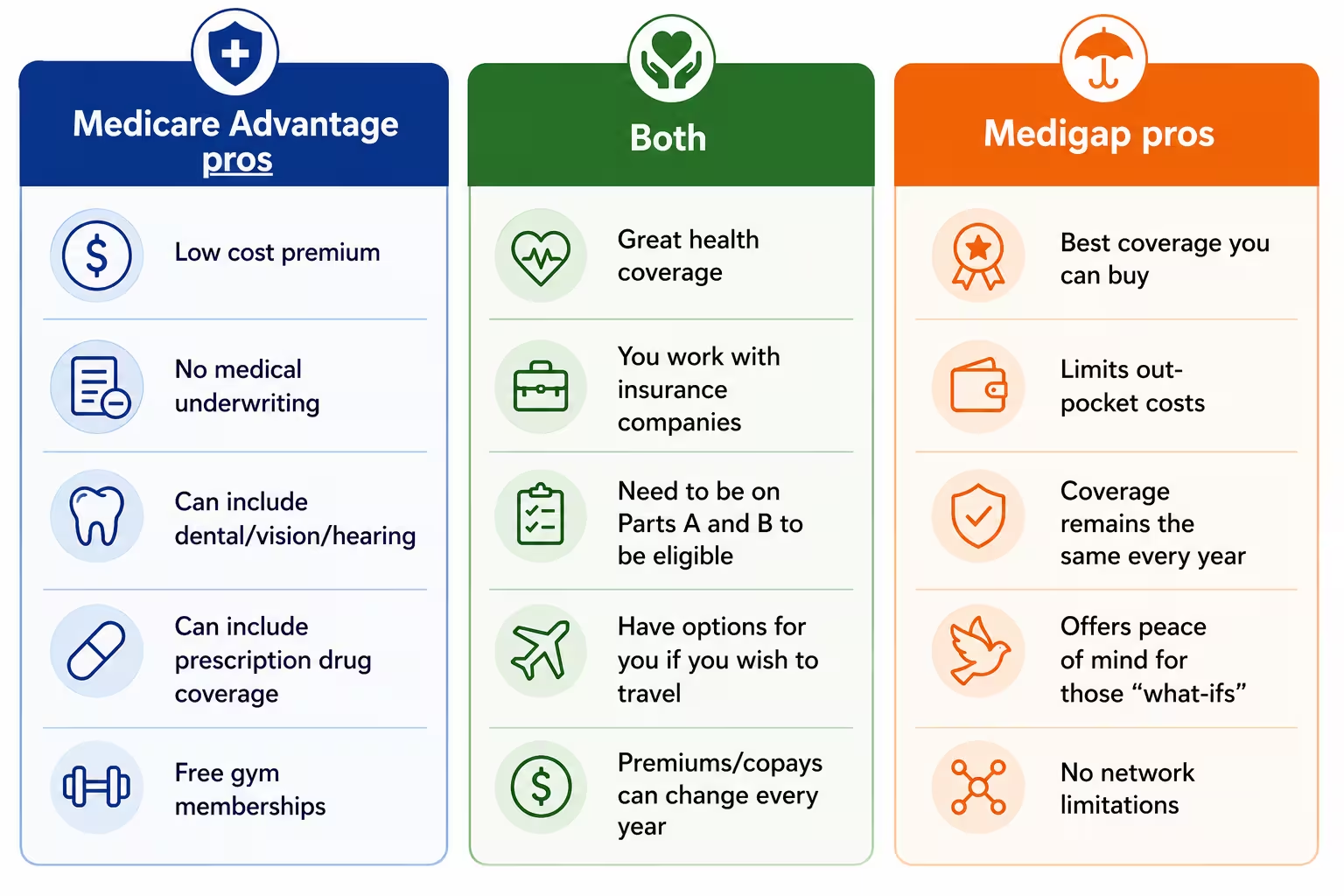
There is no right or wrong choice when considering these supplemental options to Original Medicare. It all depends on which is right for you as both options work differently. We wanted to represent the differences between each to help you understand that they both have their advantages and disadvantages. There is no one size fits all. It depends on each individual’s budget, medical history, needs, etc.
Frequently Asked Questions
What are Part B excess charges?
Physicians have the ability to “accept assignment”. This means that the physician accepts the approved Medicare cost for a specific service. If a physician does not “accept assignment”, they may charge up to 15% more than the Medicare approved amount, which is also known as excess charges. It’s best to consult your doctor to determine if they accept assignments.
Am I covered outside of the United States?
Generally no, but some Medicare Supplement plans include a foreign travel benefit. This pays 80% of your expenses up to $50,000. You must first pay a foreign travel deductible, typically $250, and then you pay 20%.
When can I change my Medicare Supplement plan?
This can happen whenever you want. You are not restricted to an enrollment period to make changes or sign up for a plan. Although, if you are past your open enrollment period, you will be subject to medical underwriting. Your Medigap Open Enrollment Period is 13 months long. It starts 6 months before your birth month, your birth month, and the 6 months following your birth month totaling 13 months, or when you first start your Part B.
We're Here to Help You!
Have questions or need personalized guidance? Fill out the form and one of our experts will get back to you.