

Medicare Advantage
Upgrade your coverage with Medicare Advantage. Enjoy all the benefits of Original Medicare, plus extra perks with low or $0 monthly premiums.
- $0 premium options available.
- Includes dental, vision, and hearing.
- Prescription drug coverage included.
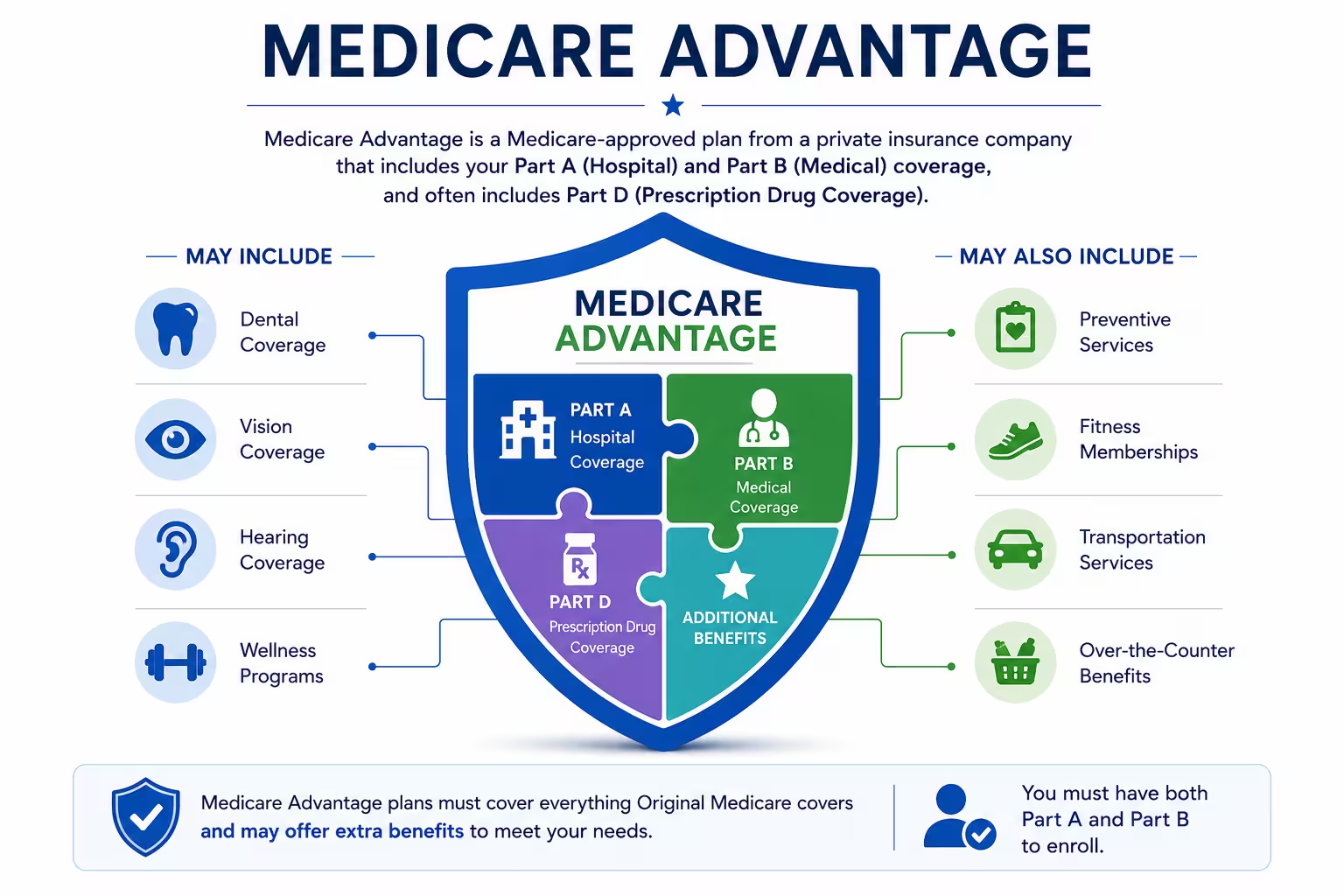
Medicare Advantage is private insurance that’s offered by insurance companies to replace Original Medicare as your primary insurance.
Most Medicare Advantage plans offer benefits that Original Medicare doesn’t have, such as: A maximum out-of-pocket, dental/vision/hearing, free gym memberships, and prescription drug coverage
Using MA plans requires you to operate within networks for the best pricing on services.
To enroll into Medicare Advantage, you must be within an enrollment period or qualify for a Special Enrollment Period.
Medicare Advantage, or Part C, is a supplemental health insurance option for Original Medicare. It’s private insurance that’s offered by carriers, or insurance companies, in place of Original Medicare. It was initially designed by congress as a lower-premium option available to Medicare beneficiaries. Once you have Mediare Advantage (MA), those insurance carriers become your primary insurer and Original Medicare operates in the background, sort of like secondary insurance. All further claims, payments, and benefits will be processed through whichever carrier you enroll with.
How does it Work?
To get Medicare Advantage, you must be signed up for Parts A and B of Original Medicare. The carrier supplies your Part A and B benefits and in return, Medicare pays a fee to these companies every month. You have influence – through customer reviews, star ratings, and plan complaints all influence how much insurance companies get paid by Medicare.
MA plans are all different. The idea is catering the plan to the individual because there should be a plan out there for everyone. The summary of benefits explains the differences in benefits, copays, deductibles, etc. Carriers decide what these costs are and which area they want to offer the plan (based on counties). For most health services under Medicare Advantage, there is a copayment - you receive services and you owe X amount. Some services are offered at a coinsurance – you pay a percentage of what the service costs.
The most expensive services are typically inpatient hospital stays, outpatient surgeries, emergency transportation such as ambulance or helicopter, Part B drugs, and chemotherapy. There are other affordable supplemental options that cover these “gaps” in MA plans well, and to see a list of such options check out our Ancillary page.
Now these Medicare Advantage plans must cover the same services as Original Medicare, either in the same way or better, with a few exceptions. Those exceptions are long-term care and hospice. Those services are still offered by Original Medicare in the background of your MA plan, although there are requirements for such services. There is good news though: Some MA plans also have benefits that Original Medicare does not have, such as dental/vision/hearing coverage, free gym memberships, and prescription drug coverage.
Cost
All MA plans have a premium associated with enrollment. As of 2026, most MA plans have a $0 premium, but that is based on factors such as which insurance carrier owns the plan and the service area the plan operates. Not every county will have a $0 premium plan. Other costs such as copays are generated when you receive health services, that you pay at the time of service.
Most MA plans also offer prescription drug coverage. Because these are large companies, they often provide a friendly cost-share when purchasing prescriptions through their plans. Prescription costs are determined by whether you’re taking a generic or brand name, which tier the prescription belongs to, and whether the prescription is on the plans Rx formulary. To sum it up - In most cases, with no additional cost to get an MA plan, they offer additional benefits to Original Medicare. But now, you must operate within networks.
Networks
When choosing a Medicare Advantage plan, you want a plan that gives you access to the medications and providers that you require. Unlike Original Medicare, MA plans require you to operate within networks. These networks are built by insurance carriers – they contract with providers to offer services rendered at a certain rate or copay. In the end, you pay the provider your agreed upon copay and the carrier pays a contractual rate.
As brokers, we consider your prescriptions and the providers you already use. This helps us determine which plans fit you best. The most common networks to choose from are a PPO and HMO.
HMO or Health Maintenance Organization – This type of plan allows you to only use in-network services except in the case of emergencies. In an emergency, most HMO plans bill the provider as an in-network service. To become an in-network provider, local physicians contract with insurance companies to offer set rates for services.
When signing up for an HMO, you must select a primary care physician (PCP) to coordinate your care. Some companies require you to have referrals from your PCP to see specialists. As of 2026, the majority of MA plans offered are HMOs. The advantage of having an HMO is that compared to PPOs, their benefits tend to be slightly richer since you are limited to a network.
PPO or Preferred Provider Organization - This type of plan allows you to use in-network services AND out-of-network services. Out-of-network services are usually offered at a higher cost, but the key idea is you have the option. The advantage of using a PPO is the flexibility to use out-of-network providers, which comes in handy if you plan to travel or you would like to continue to receive care from a physician that is not contracted with your plan.
Enrollment
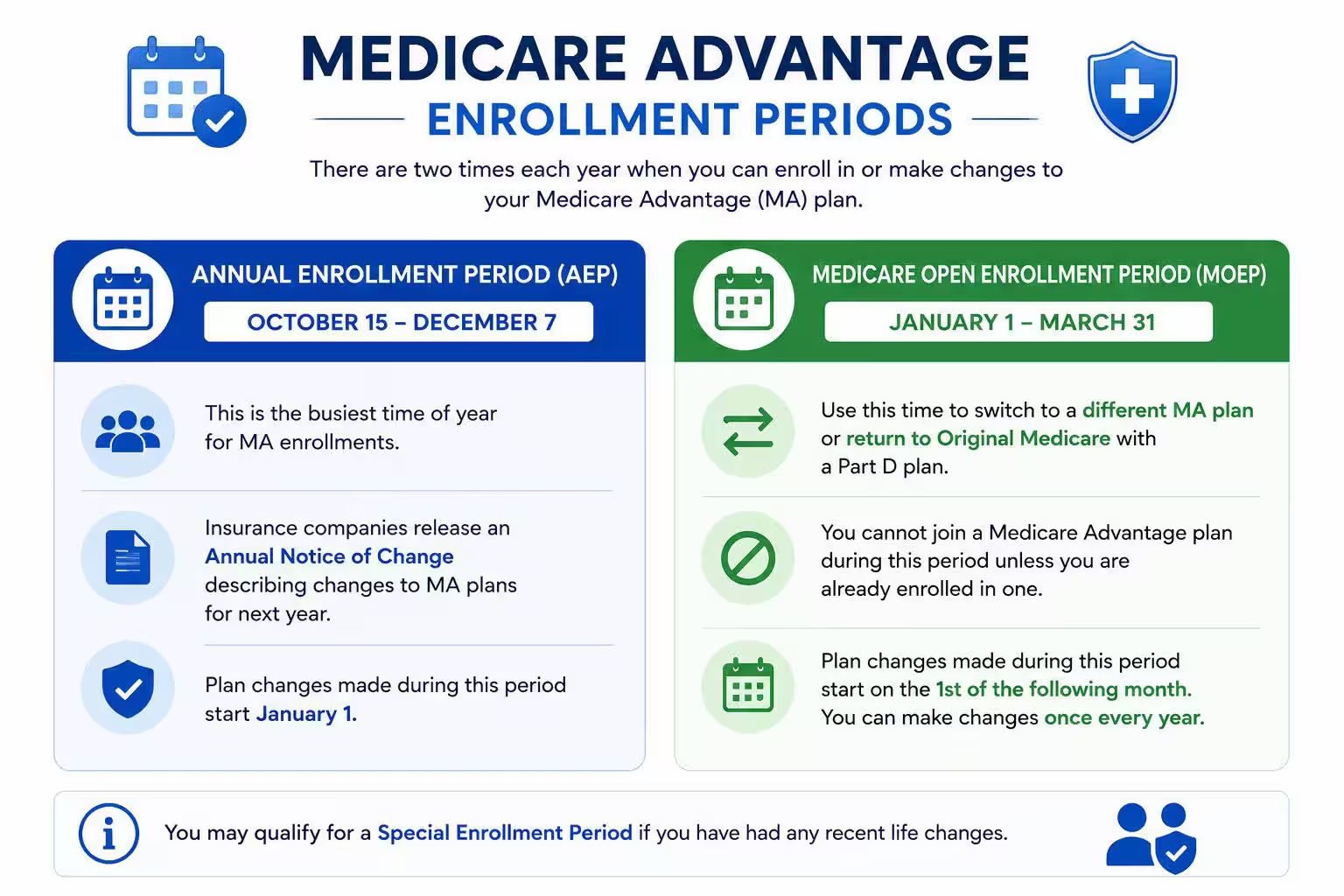
The first time you’re eligible to join Medicare Advantage you can enroll during your Initial Enrollment Period. Once that period passes, there are only certain times you may enroll or dis-enroll from a plan. You may qualify for a Special Enrollment Period if you have had any recent life changes, but generally there are two enrollment periods that give you the opportunity to join an MA plan.
Annual Enrollment Period (AEP) – This period runs from October 15th to December 7th. This is the busiest time of year for MA enrollments. That is because by this time, insurance companies have released an Annual Notice of Change. This document describes changes to beneficiaries’ current MA plans that will start next year. Beneficiaries that make any plan changes during this period will have their new coverage begin January 1st.
Medicare Open Enrollment Period (MOEP) – This period runs from January 1st to March 31st. Beneficiaries already on an MA plan can use this period to enroll into a different MA plan or return to Original Medicare with a Part D plan. The period cannot be used to join a Medicare Advantage plan if you are not currently enrolled.
The idea behind MOEP is to offer a second chance to individuals that may have made a wrong choice when choosing their own plan during AEP, their provider fell out of network, maybe their prescriptions weren’t covered as well, or they just didn’t like the service. Any plan changes will begin on the 1st of the following month. Plan changes during this period may only happen once every year.
Special Needs Plans SNP
Special Needs Plans, or SNPS, are Medicare Advantage Prescription Drug plans that coordinate care to individuals with special needs or conditions. These plans are limited to beneficiaries that have chronic conditions, specific illnesses, or those on Medicaid. The benefits of these plans are specifically meant to cater to these beneficiaries’ needs for their health conditions, prescription drugs, or income-based circumstances.
Chronic Special Needs Plans (C-SNP)
These plans specifically cater to beneficiaries with certain illnesses or chronic conditions. A care coordinator is assigned to your plan to help manage your care and assist you in accessing resources available in the community. The Rx formularies on these plans are made to include prescriptions that are typically tied to these chronic illnesses.
To be eligible, your provider must verify that you have one of these qualifying conditions: diabetes, chronic heart failure, chronic lung disease, or ESRD requiring dialysis. You may only stay enrolled in SNP plans if you continue to meet their special conditions.
Dual-Eligible Special Needs Plans (D-SNP)
These plans are specifically made to coordinate care between Medicare and Medicaid. You must be eligible for both, in order to enroll into a D-SNP. There are some states that offer “integrated D-SNPS” that combine all your Medicare benefits and some or all of your Medicaid benefits into one plan. Depending on your level of Medicaid, some or all of your cost-share for services will be covered.
Institutional Special Needs Plans (I-SNP)
These plans offer coordinated care to individuals living in an institution, such as a nursing home or an assisted living center. I-SNP’s focus on coordinating care with the institution itself, to keep beneficiaries healthy and on track with their providers’ instructions.
The Special Supplemental Benefits for the Chronically Ill (SSBCI)
Many Special Needs Plans offer SSBCI healthy food allowances if you meet certain qualifying conditions. Not everyone on a SNP qualifies for these healthy food cards. Each insurance company has list of chronic qualifying conditions that members must meet to be eligible for these cards. Many of these SSBCI benefits can be applied to utility bills, over-the-counter medications, rent/mortgage, and more.
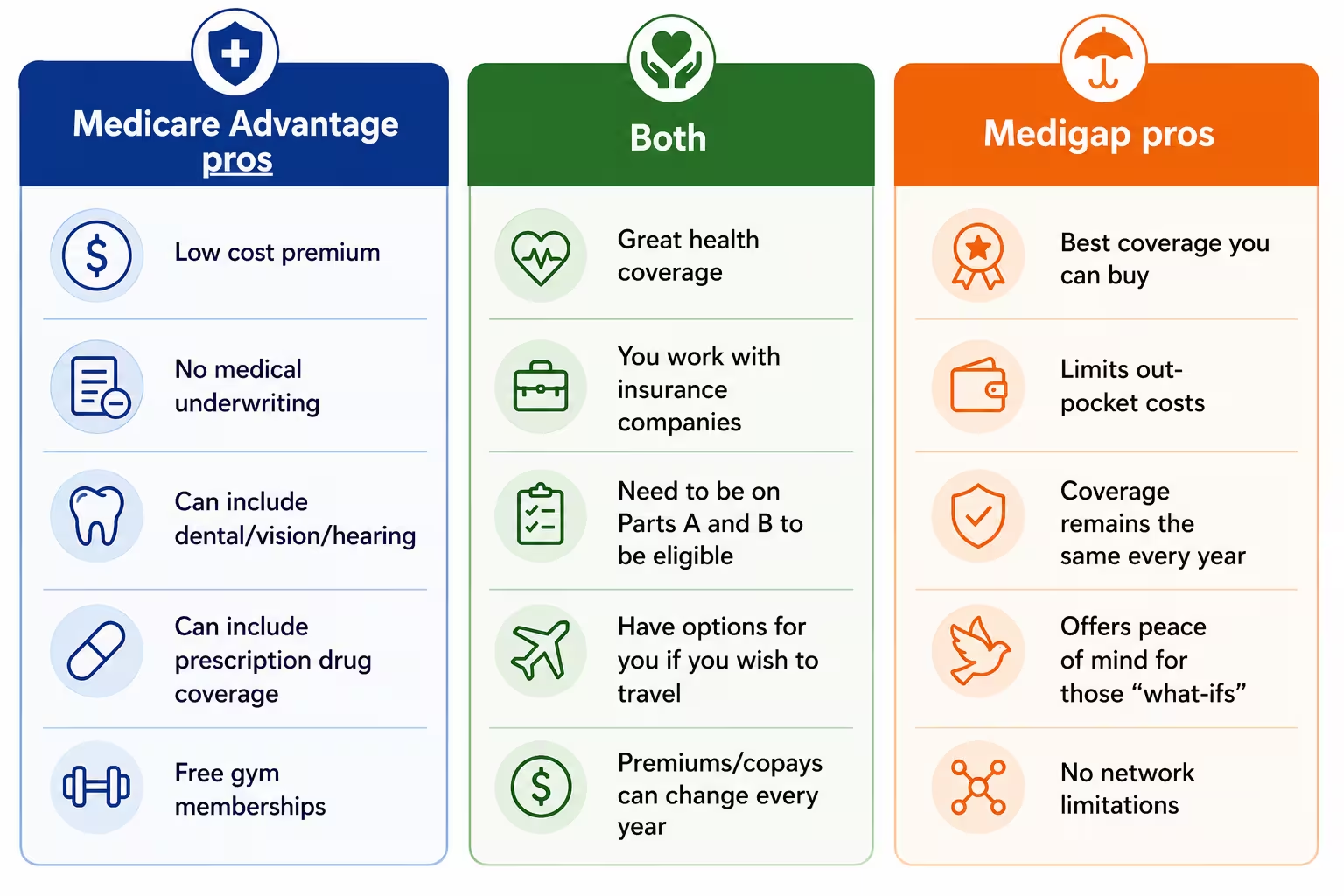
Medicare Advantage vs Medigap
There is no right or wrong choice when considering these supplemental options to Original Medicare. It all depends on which is right for you as both options work differently. We wanted to represent the differences between reach to help you understand that they both have their advantages and disadvantages. There is no one size fits all. It depends on each individual’s budget, medical history, needs, etc.
Frequently Asked Questions
What is an MAPD?
An MAPD is a Medicare Advantage Prescription Drug plan. As the name suggests, it’s a Medicare Advantage plan that has prescription drug coverage rolled into one plan. The general abbreviation for plans that don’t include Rx coverage is MA.
Do I still pay my Part B premium if I have Medicare Advantage?
Yes, as you must have both Parts A and B to enroll into Medicare Advantage. Original Medicare never goes away, but once you enroll into Medicare Advantage, your primary insurance is now through a private company.
Why does Medicare Advantage plans have such a low premium?
Since Medicare Advantage companies take on your medical risk, Medicare pays these companies a monthly fee. This fee covers most or all of your premium, resulting in low or no cost premium plans for you.
Can I get this food card that I hear so much about?
Many of the commercials you may see referring to food cards are typically scams, saying that everyone will qualify if you call the number on the screen.
There are, however, healthy food allowances for individuals that qualify for SSBCI, or Special Supplemental Benefits for the Chronically Ill. SSBCI is usually only offered on Medicare Advantage Special Needs Plans (SNP’s), so you must have a qualifying chronic condition or illness to be eligible for a healthy food card.
Click here to learn more about Medigap
We're Here to Help You!
Have questions or need personalized guidance? Fill out the form and one of our experts will get back to you.