
Life Insurance
Life insurance helps provide your family with the financial security they deserve. It’s asset protection and peace of mind bundled into one product.
- Financial security for family.
- Asset protection, peace of mind.
- Cover final burial expenses.
- Prepare for the future.
Life insurance helps provide your family with the financial security they deserve.
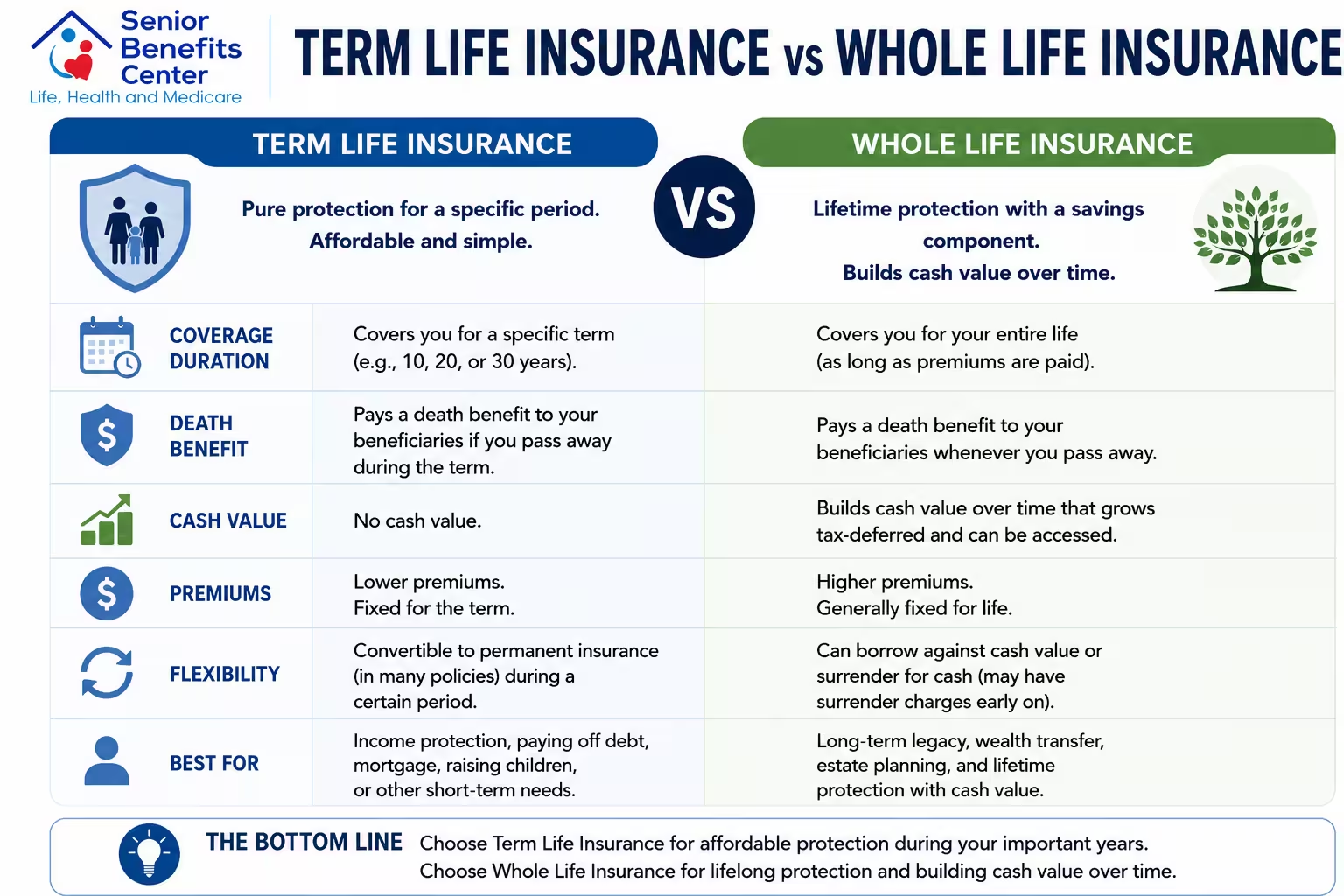
Deciding between the two major types of life insurance, whole or term, depends on your financial goals, budget, and coverage needs.
Final Expense, or Burial Expense, is used to cover burial expenses and more so loved ones don’t experience financial burden.
Riders can be added to your life insurance policy if you wish for additional coverage.
Life insurance is a no brainer. It’s asset protection, financial security for your family, and peace of mind bundled into one product. Death is an emotional time for a family; the loss of income and looming threat of unpaid bills only makes it worse. Preparing for the future with life insurance is an easily accessible solution for many.
To begin with the basics: life insurance is a contract between an individual and an insurance company. This contract simply states that in exchange for a monthly premium paid by the individual, the insurance company will pay a lump sum to the individual’s beneficiaries upon the insured’s death. Like many insurance plans, purchasing a policy at a younger age yields a lower premium. Now deciding between which life insurance policy depends on your financial goals, budget, and coverage needs.

Types of Life Insurance
There are two major types of life insurance, term and permanent (also known as whole life). Term life insurance only provides coverage during a set timeframe and typically expires with no cash value. Whole life insurance is just like the name says: good for your whole life, as long as you keep paying the premiums.
With permanent life insurance, there's a guaranteed payout at the end, but the trade-off is that it's much more expensive — generally 10 times the price of term. To offset those costs, permanent life policies include a tax-deferred savings account that earns interest over time. A portion of the premium goes into the savings account, which you can use as collateral against a loan, and the interest the account earns can be used to pay your premium. If you cash out the account, though, say goodbye to your death benefits.
A spirited debate persists among experts on the pros and cons of term and permanent. The basic argument for term is that the savings component of permanent policies can be better realized by simply investing the amount you'd pay for the more expensive permanent policy somewhere else, like your 401(k) or IRA. Proponents of permanent counter that term insurance has zero value once it expires, while permanent policies are at least always worth something.
There's a trade-off for sure, but one thing is certain: term life policies offer the most protection for the buck.
Senior Benefits Center provides various types of both term life and permanent life insurance. We're here to help you cover the ones you love.
Term Life
With term life insurance, you can save your family from worry by providing them with a cash benefit in the event of your death, giving them the security they need to avoid serious financial problems during a difficult transition. Coverage is provided for a specific period, usually 10-30 years.
Living Benefits Term Life
Not all term life insurance is created equally. Most term life insurance policies only payout when you die. Some term life insurance policies can also provide access to benefits while you're still living. Living Benefits are designed to help take care of you and your family by enabling the owner to access the portions death benefit in the event you experience a chronic, critical or terminal illness.
Mortgage Protection
For most American families, A mortgage represents the largest source of personal debt, a debt that easily defaults in the event of the primary breadwinner's death. Mortgage protection insurance is designed to pay off your mortgage in the event of your death to make sure you family can keep their home no matter what. We also offer mortgage disability insurance to ensure that payments are made when you are unable to work due to an illness or injury.
Whole Life
Whole life insurance is a valuable insurance product that protects an insured for their entire life. Unlike the popular and less expensive term insurance, whole life insurance remains in effect as long as the premiums are paid. While whole life insurance is much more expensive than term insurance, and it offers several advantages. The death benefits are paid to the beneficiary tax-free and can be used at the beneficiary's discretion. A whole life policy is a great gift to purchase for children as a savings instrument or college fund.
Final Expense
Final expense insurance, also known as Burial insurance, is a type of whole life insurance with lifetime fixed rates that allows the named insured to feel safe knowing that funeral-related expenses are covered regardless of the statutes of their estate at the time of death. Have peace of mind knowing that your loved ones are taken care of and that you aren’t placing any financial burden on your family. No financial burdens? No problem, leave a legacy
Guaranteed Acceptance
A type of permanent life insurance that guarantees approval for eligible applicants. Most guaranteed acceptance policies are purchased to cover final expenses, to ages 50-85, that may have pre-existing conditions or a complicated medical history. Because the insurance company is “looking the other way” when it comes to medical conditions, these premiums are higher than the price of a final expense policy. Still, peace of mind is provided knowing funeral-related expenses and outstanding debt won’t burden loved ones.
Indexed Universal Life (Iul)
Many of us have the same question and concerns for when we are older "Will I have enough money coming in each month to retire and live comfortably"? IUL's have many benefits and features besides a death benefit. IUL policies allow you to take money out of your policy when you need it without a penalty and extend retirement cash flow for up to 30-40 additional years from a traditional 401k, IRA or mutual funds.
Riders
Life insurance riders are add-ons to your policy; they provide additional coverage. Riders are offered by insurance carriers as a competitive advantage, so they can be low or no additional cost to your premium. Your agent will ask which optional riders interest you. Popular options include:
Accelerated death benefit rider – provides financial support while you’re still alive. If you’re diagnosed with a terminal illness with 6 to 12 months to live, a large portion of your death benefit can be cashed in. Funds may be used for medical expenses, but they also can be used on travel so you may spend your last days however you please.
Critical illness rider – this also pays out an accelerated benefit if you have a critical illness that lowers your life expectancy, such as heart attack, cancer, or stroke. The lump-sum withdrawn from your death benefit will be deducted from your benefit that will go to your beneficiaries.
Child protection rider – a small death benefit will be paid if your child passes away. Funds may be used to cover funeral expenses or time off work while grieving. This also may be used if your child has a medical condition that lowers their life expectancy.
Return of premium rider – get your premiums back if you outlive your policy’s term. Rates to add this rider are typically costly. Consult your agent to see if this rider is worth the cost.
Accidental death and dismemberment rider – additional coverage for people with risky or dangerous hobbies/occupations. This rider pays out for loss of limb, eyesight, or hearing in an accident.

Frequently Asked Questions
Do I need Life insurance?
Life insurance is primarily for those with dependents or financial obligations. You want your income, debts, and expenses covered if you should meet an untimely death. Financial protection is one of the best gifts you can leave behind.
How much coverage do I need?
Your level of coverage depends on your financial responsibilities and lifestyle. A common approach is LIFE: L – living expenses, I – income replacement, F – final expenses, E – education. Most importantly, you want your coverage to be affordable.
Can I have multiple policies?
Yes, you can have multiple policies for different purposes. A term policy may be for mortgage protection, while a final expense policy may be used to settle your debts and leave money for your loved ones.
We're Here to Help You!
Have questions or need personalized guidance? Fill out the form and one of our experts will get back to you.